
Rosacea
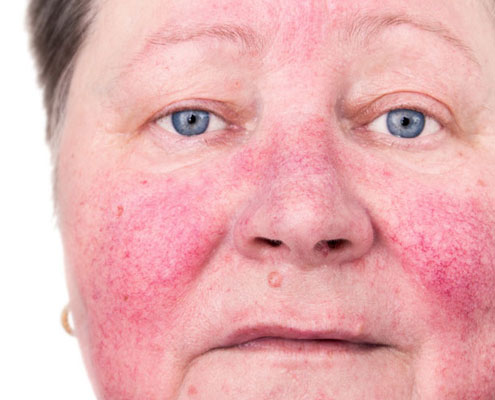
Rosacea is a chronic rash involving the central face that occurs most often in those between the ages of 30 to 60.
It can cause flushing, constant redness, bumps, and pustules, as well as swelling of the skin on the nose and irritation of the eyes. It can flare due to stress and environmental factors, and can be embarrassing and very difficult to manage. Successful management includes proper care of your skin and the right treatments.
Our dermatology specialists have the experience and tools to help clear your skin , including medications, lasers and light treatments that can be very effective at finally giving you control of your rosacea.
Understanding rosacea
Rosacea is a chronic inflammatory skin condition predominantly affecting the central face and most often starts between the age of 30–60 years.Rosacea is common and is characterised by persistent facial redness. It typically has a relapsing and remitting course, with symptoms controlled by lifestyle measures, general skin care, medications, and procedural interventions.
Factors that cause rosacea
- Genetic susceptibility
- Altered microbiome of the skin and gut
- Neurocutaneous mechanisms
- Impaired skin barrier
Common Rosacea Triggers
While every patient’s experience is unique, several triggers frequently worsen symptoms:
- Sun exposure and heat
- Alcohol or spicy foods
- Emotional stress
- Hot beverages
- Certain skincare products or fragrances
Keeping a simple diary of activities and environmental conditions can help pinpoint your specific triggers and guide your care plan.
Gentle Skin Care Makes a Difference
Because rosacea-prone skin is sensitive, gentle cleansing and hydration are essential. Dermatologists often recommend fragrance-free cleansers and moisturizers that strengthen the skin barrier. Avoid harsh scrubs, alcohol-based toners, or exfoliants that can aggravate redness. Using a daily sunscreen with SPF 30 or higher also helps protect against UV-related flare-ups.
Advanced Dermatologic Treatments
Professional care can minimize both symptoms and visible redness. Depending on the type and severity of rosacea, your dermatologist may suggest:
- Topical or oral medications to control inflammation and visible vessels.
- Laser or light therapy to reduce persistent redness and dilated blood vessels.
- Customized maintenance plans that combine medical treatment with appropriate skincare products
- Regular follow-ups allow adjustments as your skin improves or as triggers change over time.
Supporting Confidence and Skin Health
Beyond the physical symptoms, rosacea can affect confidence and comfort in social settings. Our dermatologists understand this emotional impact and take a compassionate approach—addressing both the medical and cosmetic aspects of the condition. Education and early intervention are key to keeping redness manageable and helping patients feel more at ease in their skin.

